
Somewhere in your store setup, a toggle is waiting: add Afterpay? Add Zip? The platforms make it one click, the providers make it sound essential, and nobody puts the actual cost on the button.
I’ll be straight with you — this is a maths decision wearing a marketing costume. Let’s do the maths.
What does BNPL cost you as the seller?
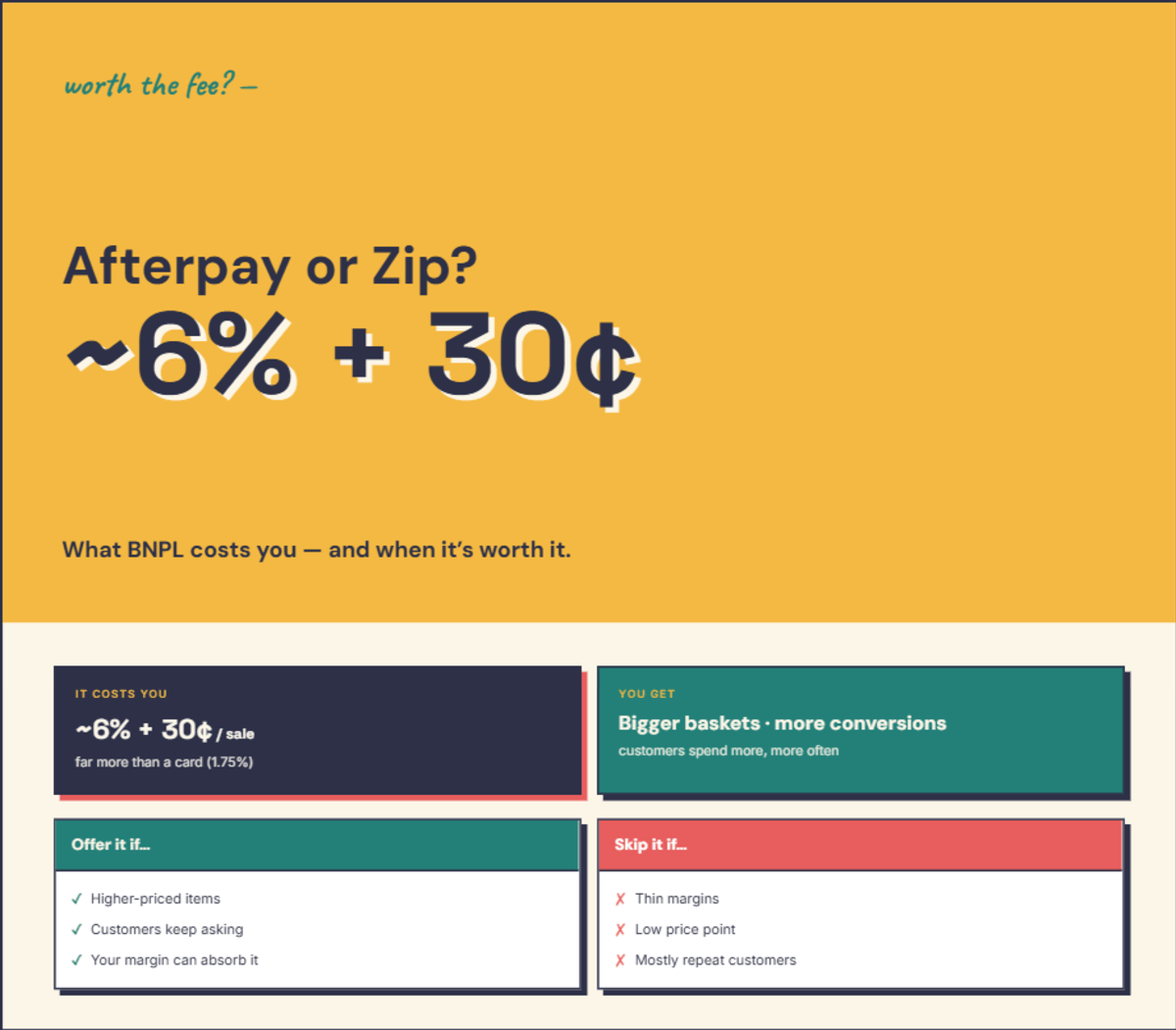
More than cards. A lot more. Card processing runs about 1.75% + 30¢ per sale. BNPL merchant fees typically land around 4–6% plus a fixed fee — through Square, Afterpay is 6% + 30¢ (excluding GST). Call it roughly three times the cost of a card payment.
On a $100 sale, that’s the difference between keeping about $98 and keeping about $94. The customer pays in four; you pay the four percent.
What do you actually get for it?
A few genuine things, in my experience. For a brand-new store, the badge is a trust signal — a recognised name at your checkout when nobody’s heard of you yet. The providers also run directories and shopper newsletters, and getting featured can bring a small lift in visibility. Small. But not nothing when you’re starting from zero.
And for the right products, instalments genuinely change buying decisions. A $250 considered purchase feels different at four payments of $62.50. That’s the whole business model — and sometimes it works in your favour.
The question that settles it
Here’s where people trip up: they ask “is BNPL good or bad?” when the real question is about their customers.
Who’s your audience? Do they use these tools? And if they do — if some of them genuinely won’t buy without instalments — then the decision reframes itself: would you rather have 96% of the sale, or no sale?
For some stores, that question answers itself instantly. For others — thin margins, low prices, customers who pay by card without blinking — the honest answer is the fee buys you nothing. Different businesses, different stages, different answers. Yours is in your margins and your customer list, not in anyone’s blog post.
Didn’t the rules change recently?
They did, and it’s worth knowing even though most of the weight falls on the providers. Since June 2025, BNPL is regulated as credit in Australia — providers need a credit licence, and the sign-up checks got more serious.
For you as a merchant, checkout works the same. The bit that does touch you is marketing: the providers updated their advertising rules, so if you promote BNPL in your ads or on your site, follow your provider’s current guidelines rather than winging it. And a related date for your calendar — card surcharges end on 1 October. BNPL sits outside that ban for now, but your provider agreement sets its own rules on passing fees along, so read it before you try.
So — should you offer it?
Don’t overthink it. Work through three questions with real numbers.
First, your margin: can it absorb roughly 4–6% on BNPL sales and still leave the sale worth making? Second, your price point: instalments matter on considered purchases far more than on $20 items. Third, your customers: is there evidence they want it — abandoned checkouts, direct requests, competitors all offering it?
Two or three yeses, turn it on and watch the numbers. Mostly nos, skip it with a clear conscience — plenty of healthy stores run on cards alone. And it’s a toggle, not a tattoo: trial it for a quarter, then let your own sales data vote.
If you’d like a second pair of eyes on your margins before deciding, that’s a 15-minute chat — no pitch, just the maths done honestly. The wider picture of what selling online really costs lives in my store cost guide.
Frequently asked questions
How much does Afterpay cost the merchant?
Through Square it's 6% + 30¢ per transaction (excluding GST). Standalone Afterpay and Zip merchant rates are negotiated per business and typically sit around 4–6% plus a fixed fee — confirm your actual rate with the provider before deciding.
Can I pass BNPL fees on to customers as a surcharge?
The card surcharge ban starting 1 October 2026 covers eftpos, Visa and Mastercard — BNPL sits outside it and under a separate review. In practice, provider agreements set their own rules on surcharging, so check yours before adding anything at checkout.
Is BNPL worth it on low-priced products?
Usually not. On a $30 item, the fee is small in dollars but the instalment appeal is too — BNPL earns its keep on considered purchases where splitting the payment genuinely changes the buying decision.
Got a question? Need some advice?
Book a free 15-minute call. No pitch — just straight answers. Most people walk away with a clear next step or a blocker sorted.
Book a Free Call →