
Tips, Guides & Honest Advice | PSOS
The blog of Plain Speak Online Services Scarborough, WA · 82 plain-English guides Price: Free, always
Est. 2025 26 July 2026 · Perth, Western Australia No jargon

The Plain Speak Post

Everything I know about websites, Google, online stores and automation — written down, in plain English, for Australian small businesses.

— all of it free, none of it fluff. Danny
Tools, Automation and CRM · Today’s lead

Too Many Subscriptions? How to Consolidate Your Small-Business Tools

26 July 2026 · 8 min read · by Danny

the short answer, free of charge ↓ The short answer

Start by listing every tool you pay for — email marketing, CRM, bookings, forms, SMS, landing pages, automation glue — with the monthly cost of each. Then look for overlaps: most stacks have two or three tools doing parts of the same job. From there you have three honest options: move to an all-in-one platform, build a small connected stack of right-sized tools, or simply cancel what you're not using. Paying separately for three or more categories typically runs $80–150+ AUD a month, which is roughly the point where consolidating starts to pay for itself.

Read the long answer →

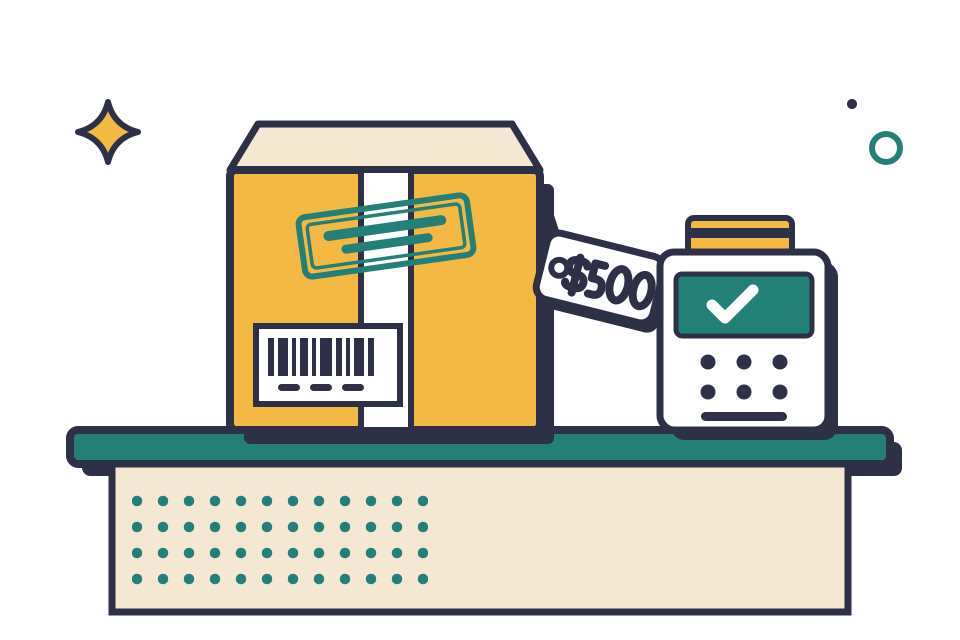
Tools, Automation and CRM illustration
Today’s lead is filed under Tools, Automation and CRM

Plain-English guides to CRM, automation, and the tools that save small business owners time. What a CRM actually does, which tasks are worth automating, and how to stop juggling five different subscriptions.

20 guides in this section
ASmall Business Websites All 38 →
Small Business Websites illustration

Everything I've written about websites for Australian small businesses — from whether you actually need one, to how much it costs, to what pages to include and how to choose between building it yourself or hiring someone. Real prices in AUD, honest advice, no jargon.

Browse all 38 →
Getting your first website
The short answer

Most businesses need a website eventually — probably sooner than they think. Social media is great for visibility, but it won't help you show up when someone searches Google, asks ChatGPT, or uses a voice assistant. A website gives you a home base you control. If you're getting clients through word of mouth and social media right now, you might be fine for a while — but the moment you want to be found by people who don't already know you, a website becomes essential.

Read the full guide →
NDIS and not-for-profits
The short answer

There's no official NDIS website checklist — but several legal obligations affect your online presence, including accessible communication under the Practice Standards, privacy requirements, complaints pathways, and rules about how you use the NDIS name and logo. A good NDIS provider website needs clear service descriptions, a referral form, your registration details, and genuine accessibility built in from the start.

Read the full guide →
+ 30 more in the full section →
BOnline Stores and E-commerce All 15 →
Online Stores and E-commerce illustration

Real costs, platform choices, and honest guidance for starting and running an online store in Australia. Shopify vs WooCommerce, payment processing fees, and what e-commerce actually involves for a small business.

Browse all 15 →
Starting an online store
The short answer

An online store in Australia costs significantly more than a standard website. A basic Shopify or WooCommerce store runs $1,200–$3,000 to set up plus $40–$150 per month in platform and hosting fees. You'll also pay payment processing fees of 1.75%–2.9% per transaction. Realistic first-year total cost for a small online store is $2,500–$6,000+, depending on the platform, number of products, and who builds it.

Read the full guide →
Platforms and payments
The short answer

Shopify is a hosted platform — you pay from A$56/month and they handle hosting, security and updates. WooCommerce is free software you run yourself — cheaper on paper, but hosting, maintenance and extensions are your job. For most non-technical Australian small businesses, Shopify's simplicity wins; WooCommerce suits those with technical comfort or developer support who want full control.

Read the full guide →
+ 7 more in the full section →
CTools, Automation and CRM All 20 →
Tools, Automation and CRM illustration

Plain-English guides to CRM, automation, and the tools that save small business owners time. What a CRM actually does, which tasks are worth automating, and how to stop juggling five different subscriptions.

Browse all 20 →
Automation, explained
The short answer

Business automation means using software to handle repetitive tasks that you'd otherwise do manually — things like sending booking confirmations, following up with enquiries, or reminding clients about appointments. It's not about replacing people. It's about freeing up your time so you can focus on the work that actually requires a human.

Read the full guide →
Your industry, automated
The short answer

Every business has tasks that could be automated — most owners just don't realise which ones. The most common automation opportunities are booking confirmations, follow-up emails, review requests, invoice reminders, and lead capture. What to automate first depends on your industry. I cover specific recommendations for beauty, trades, health, fitness, coaching, hospitality, professional services, and retail.

Read the full guide →
+ 11 more in the full section →
DLocal SEO and Google All 9 →
Local SEO and Google illustration

How to get your business found on Google — from setting up your Google Business Profile, to getting more reviews, to ranking in the map pack. Practical local SEO guides written for small business owners in Perth and across Australia.

Browse all 9 →
Getting found on Google
The short answer

Local SEO is about making sure your business shows up when someone nearby searches for what you do — searches like 'plumber near me' or 'hairdresser Scarborough.' It involves your Google Business Profile, your reviews, your business listings across the internet, and location signals on your website. For most service-based and retail businesses in Australia, local SEO drives more enquiries than regular SEO.

Read the full guide →
The reviews playbook
The short answer

The businesses with lots of reviews have a process — they ask consistently, make it easy, and time the request well. The best approach is to ask shortly after delivering a positive result, send a direct link to your Google review page, and follow up once if they don't leave one. Automate the ask where possible so it happens every time without you thinking about it.

Read the full guide →
+ 1 more in the full section →

Classifieds

small ads, honestly priced (free)

Wanted

Your inbox

Plain-English tips, a few times a month. No spam. Unsubscribe anytime — I’ll still like you.

Subscribe
Free

Website audit

I’ll review your site personally and tell you what’s working, what isn’t, and what to fix first.

Claim yours
30 sec

Lost? Take the quiz

Answer a few questions, get a straight answer on what your business actually needs online.

Start the quiz

The Plain Speak Post

Printed in Scarborough, WA · Est. 2025 · No jargon since day one

Danny and his dog Cooper

the editor & the quality-control department

thanks for reading all the way down here — Danny (and Cooper)

Back to the front page ↑